
For some, kratom is a daily helper; for others, it is a novelty they are just looking to try. Whether you use it for better focus, a good mood, or a peaceful evening, you might have wondered: "How long does it actually stay in the body?" The effects usually wear off after a few hours, but your organism retains traces of kratom for longer. The blood is the very first place it enters after consumption. What influences how long it stays present in the blood, and will standard drug tests detect it?
What Happens in the Body After Consuming Kratom?
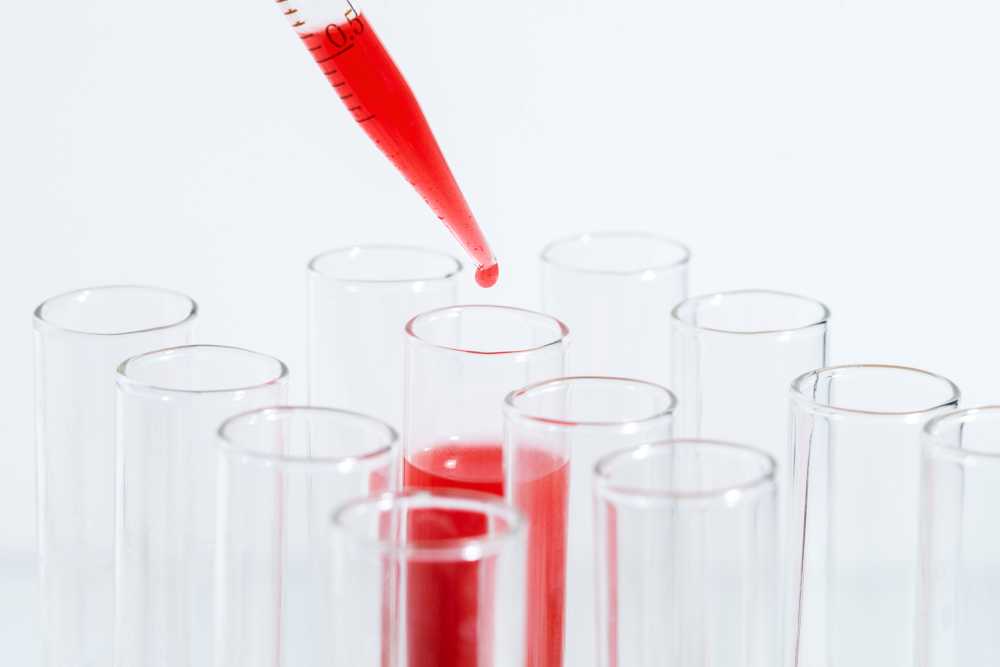
As soon as you take your dose of kratom—whether in powder, capsule, or tea form—your body immediately goes to work. Kratom’s primary active substances, known as alkaloids (principally mitragynine and 7-hydroxymitragynine), are absorbed through the digestive tract into the bloodstream. The blood then carries them throughout the entire body, including the brain, where they bind to receptors responsible for energy, mood, or pain relief.
Powder
When consuming pure powder mixed in water, the effects usually manifest within 30–60 minutes and last longer (3–5 hours). Users often choose it for work, studying, or when they need extended focus. Absorption is relatively fast because the powder comes into direct contact with stomach juices.
Capsules
Capsules are a more convenient option, but their contents must first dissolve in the body. Therefore, the effects appear slightly later, usually after 45–90 minutes. They are ideal if you want a precisely measured dose or dislike the taste of kratom.
Tea
If you pour hot water over kratom and prepare it as a tea, the onset of effects is faster, taking effect in just 20–30 minutes, though with a shorter duration (2–4 hours). It is great when you need an immediate boost. The taste can be strong, but tea is popular among experienced users precisely for its rapid onset. Keep in mind, however, that kratom is not a food and possesses psychoactive properties.
Reading Tip
Want to prepare kratom tea? Check out our tips in the article.
How Long Does Kratom Stay in the Blood?
Although the effects of kratom wear off after a few hours, its traces remain in the body longer. After consumption, the main alkaloid, mitragynine, is broken down in the liver by the CYP3A4 enzyme and subsequently excreted in the urine. Despite this, it can remain present in the blood even when you no longer feel any effects.
According to the study Pharmacokinetics of mitragynine in man by S. Trakulsrichai et al. (2015), the half-life of mitragynine, the primary alkaloid in kratom, is approximately 3 hours. This means that after about three hours, the amount of the substance in the blood drops by half. However, this does not mean kratom is entirely out of the body. Elimination occurs gradually over multiple cycles.
According to scientific studies, kratom can stay in the blood anywhere from 40 to 200 hours, roughly 2 to 9 days. It depends on the dose, frequency of use, metabolic rate, and overall health status. For occasional users, traces are typically shorter, whereas for those who use kratom regularly and in higher doses, the detection window extends significantly. On average, this is around 48 hours.
Article tip
Factors Influencing How Long Kratom Stays in the Blood
How long kratom stays in your blood is not identical for everyone. It depends on a variety of factors that determine how quickly the alkaloids are metabolized and eliminated from the body:
- Dosage and frequency of use: Higher doses or more frequent use lead to kratom accumulating in the body for longer. Regular users may therefore have traces in their blood for significantly longer periods than those who only reach for kratom occasionally.
- Metabolic rate: We all have a different pace at which our bodies process substances. People with a fast metabolism eliminate kratom faster, while it stays in the blood longer in those with a slower metabolism.
- Age and body weight: As people age, metabolic processes slow down, which is why kratom stays in older individuals longer. Body weight also plays a role—in people with a higher percentage of body fat, kratom can linger longer because it is fat-soluble.
- Hydration and lifestyle (diet, exercise, sleep): If you drink enough water, exercise regularly, and get quality sleep, your body works more efficiently and eliminates kratom alkaloids faster. Dehydration or an unhealthy lifestyle slows down this process.
- Liver and kidney health: The liver and kidneys are the primary organs that process and eliminate kratom. If they are not functioning optimally, elimination is slower, and traces of kratom may linger in the blood longer.
How to Support Faster Elimination of Kratom
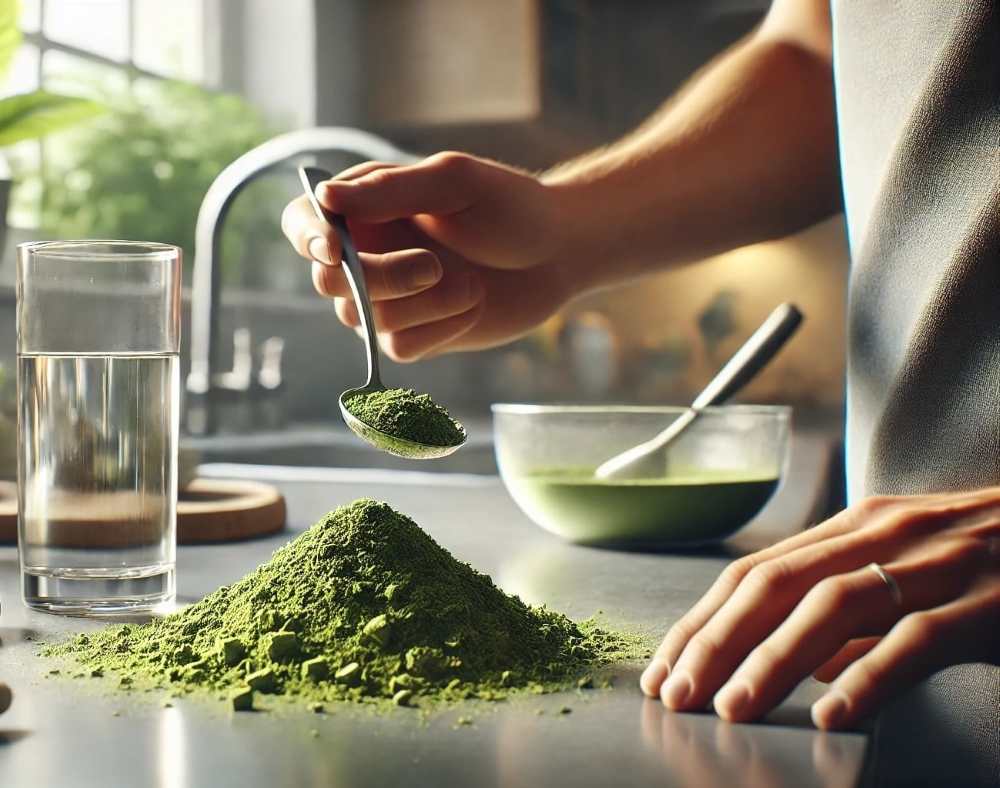
Do you want your body to deal with kratom as efficiently as possible? Small habits that support overall metabolism can help:
- Drink plenty of water – hydration facilitates the excretion of metabolites via urine.
- Light exercise – walking or working out speeds up blood circulation and metabolism.
- Quality sleep – during sleep, the body regenerates and cleanses itself.
- Balanced diet – adequate protein, vitamins, and minerals support liver and kidney function.
- Avoid alcohol and heavy meals – they can unnecessarily burden the liver, which is busy processing kratom.
Can Kratom Be Detected by Standard Blood Tests?
If you are wondering whether kratom can be detected by a standard blood test, the answer may reassure you. Standard toxicological screenings do not detect kratom. They mostly focus on substances such as opioids, cocaine, amphetamines, or THC, but kratom alkaloids are not among them.
This does not mean, however, that detecting kratom in the blood is impossible. Specialized tests exist that target mitragynine and its metabolite 7-hydroxymitragynine directly. However, these tests are expensive and used only exceptionally such as in medical studies, legal cases, or scientific research. In routine practice, such as with an employer or during a roadside traffic stop, you will rarely encounter them.
Kratom in the Blood and Safety
The presence of kratom in the blood is not just a matter of laboratory tests; it also concerns safety. Depending on the dose, kratom can act as a stimulant or a sedative, which affects your reaction time, attention, and ability to evaluate situations quickly. Higher doses carry the risk of fatigue, slowed reactions, or even drowsiness, which can be hazardous behind the wheel or when operating machinery.
Even though a standard blood test will not prove kratom use, your capabilities may be impaired, and in the event of an accident, a doctor or forensic expert could evaluate it as such. Therefore, we recommend: do not use kratom immediately before driving or operating machinery. Safety should always come first.
Kratom's effects usually wear off after 2–6 hours, but traces can remain in the blood of regular users for up to 9 days. For occasional users and on average, it is about 2 days. The distinction between feeling the effects and detection is therefore crucial – even when you no longer feel any effects, your body is still processing the kratom.
Frequently Asked Questions
Will standard drug tests detect kratom in the blood?
No. Standard workplace drug tests or roadside checks do not detect kratom because they are not calibrated for its primary alkaloids. However, specialized laboratory tests exist that can target mitragynine and 7-hydroxymitragynine—these are used only exceptionally, such as in medical research or legal cases.
How long can kratom be detectable in the blood?
Usually 24–48 hours after use, and much longer for regular users. The exact duration depends on the user's dose, metabolism, hydration, and health status.
Is kratom harmful?
Kratom is neither a poison nor a dangerous drug. However, it is a psychomodulatory substance with certain limitations. As with all substances, it depends on the dose and method of use. In smaller doses, it can support normal energy, focus, or mood. In higher doses, conversely, it can act as a sedative, cause nausea, or trigger headaches. The key is to stick to the recommended dosage, take breaks, and listen to your own body.
Disclaimer
This article is for informational purposes only and does not replace professional medical or addiction-related consultation. It does not contain recommendations regarding dosage or frequency of use. Kratom is intended strictly for adults aged 18 and over. Do not use it during pregnancy, while breastfeeding, in combination with alcohol or medication, or before driving vehicles.
Sources
THE RECOVERY VILLAGE RIDGEFIELD. How Long Does Kratom Stay in Your System? [online]. Available at: https://www.ridgefieldrecovery.com/drugs/kratom/how-long-does-kratom-stay-in-your-system/
NIH. Pharmacokinetics of mitragynine in man [online]. Available at: https://pmc.ncbi.nlm.nih.gov/articles/PMC4425236/
FRONTIERS. Understanding Kratom Use: A Guide for Healthcare Providers [online]. Available at: https://www.frontiersin.org/journals/pharmacology/articles/10.3389/fphar.2022.801855/full