
You likely already know what kratom is. This concept is no longer unknown as it was until recently. Its popularity grows by the day, along with interest in what exactly drives its effects. You may have heard that it is specific precisely because of its mitragynine content, but do you know that kratom leaves conceal many more fascinating compounds? Each alkaloid plays a specific role, and the mutual combination of these compounds determines how kratom affects the body and mind. In this article, we will take an in-depth look at the chemical composition of kratom and explore everything that influences its strength, effects, and variability among individual strains.
Alkaloids as the Key to Effects
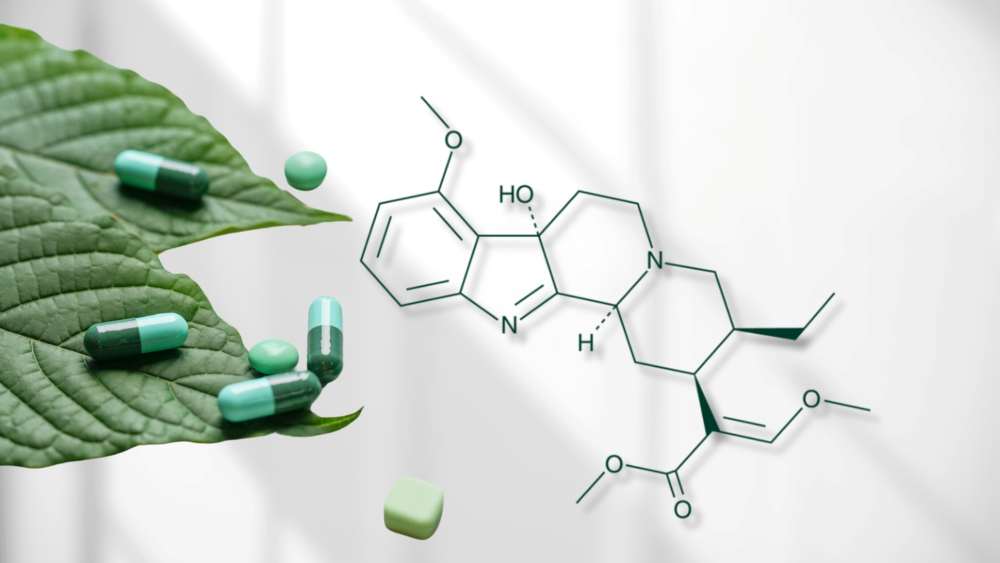
At first glance, you see an unassuming plant that harbors genuine chemical wealth. The effects of kratom are not random; behind them lies a unique combination of compounds that together form its specific profile. Alkaloids play the main role here—biologically active substances found in various plants, ranging from coffee and tobacco to poppies. And it is precisely the alkaloids that make kratom distinct from other plants. What is the basic classification of alkaloids?
- Indole alkaloids – Found in kratom, iboga, or deadly nightshade, frequently affecting the central nervous system.
- Tropane alkaloids – Typical of jimsonweed or deadly nightshade, affecting muscles and the autonomic nervous system.
- Ergot alkaloids – Contained in ergot, used in medicine and psychopharmacology.
- Purine alkaloids – Include well-known stimulants like caffeine and theobromine, supporting alertness and focus.
In kratom, indole and oxindole alkaloids dominate, creating the plant's unique chemical profile together. Mitragynine, speciogynine, or paynantheine work together, and thanks to their balance, each kratom strain has a slightly different effect. Why might two people have different experiences after the exact same dose of kratom? The answer lies in the chemical composition of this plant.
The Main Alkaloid: Mitragynine
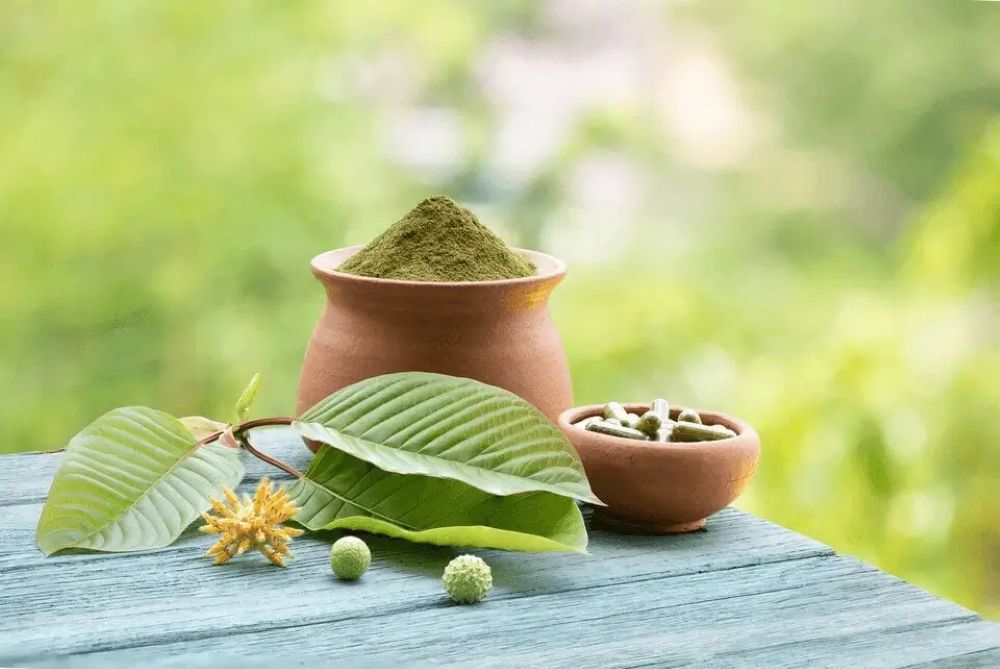
The Latin name for kratom, Mitragyna speciosa, is directly tied to its most abundantly represented alkaloid: mitragynine. Due to its unique structure, it affects the body and mind differently than classic stimulants or opioid substances, even though some of its effects can be similar.
How mitragynine acts depends not only on its concentration in the plant but also on dosage and individual organism response. And even though it is very potent on its own, its metabolism plays a key role in how kratom affects a person.
Did you know...
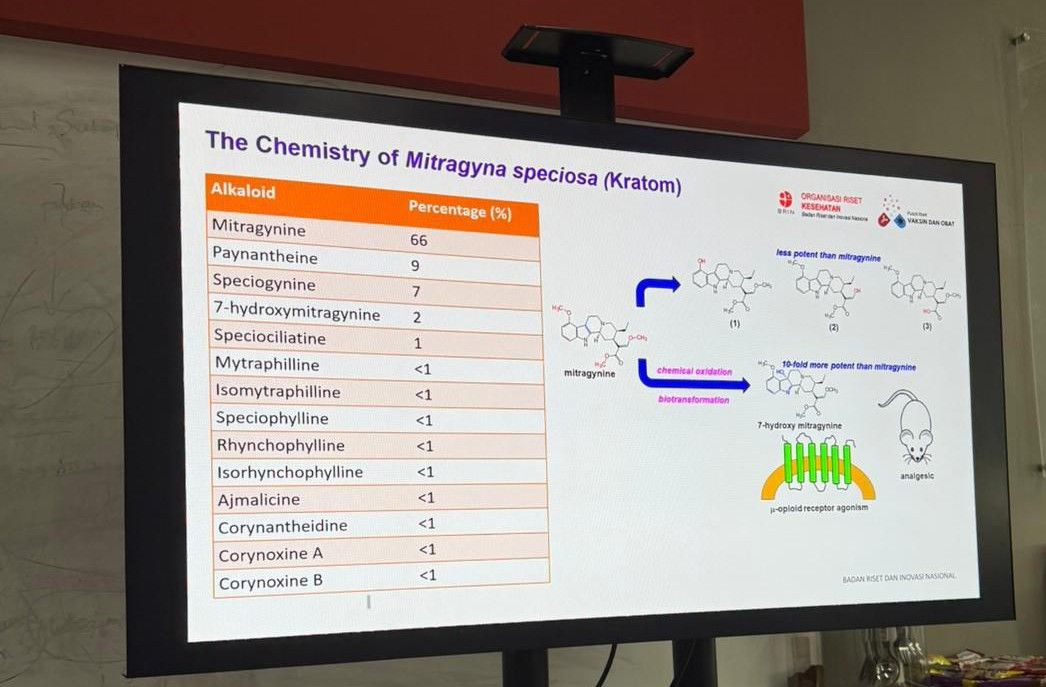
Mitragynine makes up 60% to 70% of the total alkaloids in kratom? According to a study published in the journal Frontiers in Plant Science, the mitragynine content in dried kratom leaves ranges between 7.5 and 26.6 mg per gram of leaf dry weight, corresponding to up to 69.4% of mitragynine out of the total alkaloid content in certain samples.
How Mitragynine Affects the Body and Mind
The action of mitragynine is atypical for alkaloids; it acts differently depending on the dose, yielding both stimulatory and relaxant effects.
- In low doses (1–4 g): It acts as a stimulant, similar to caffeine or theobromine from cacao. Users describe increased energy, alertness, better focus, and a euphoric feeling.
- In higher doses (4–10 g and more): Relaxant and analgesic effects begin to dominate. Mitragynine binds to opioid receptors, but differently than classic opiates—it does not depress respiratory rate, and its mechanism of action differs. People in this phase describe pain relief, muscle relaxation, and overall calming, which is why kratom is popular among those seeking a path to comfort.
Mitragynine affects serotonin and dopamine receptors, which is why it exhibits antidepressant effects and the ability to induce a sense of calm. It can help reduce anxiety, alleviate stress, and support a better mood, while simultaneously causing drowsiness in more sensitive individuals at higher doses. However, mitragynine's influence does not end with its direct action—its conversion within the body is also crucial and can fundamentally affect its efficacy.
Article tip
Conversion to 7-Hydroxymitragynine – Why Does It Matter?
When people talk about kratom and its effects, mitragynine usually takes center stage. However, alongside it exists another key alkaloid that is frequently overlooked: 7-hydroxymitragynine (7-OH-MG). Although it is present in kratom leaves in only trace amounts (less than 2%), its potency is striking.
Did you know...
7-hydroxymitragynine is considered 10–20x stronger than mitragynine and up to 40x stronger than morphine when it comes to binding to opioid receptors?
Mitragynine is metabolized in the liver via CYP450 enzymes into 7-hydroxymitragynine, which possesses a much higher affinity for opioid receptors. This biotransformation explains why kratom's effects can persist for several hours and why its relaxation and analgesic components have a stronger effect at higher doses.
What Does This Mean for Kratom Users?
- Thanks to this strong binding, 7-hydroxymitragynine contributes to pain relief – especially at higher kratom doses, where a greater conversion of mitragynine into 7-OH-MG occurs.
- People with varying liver metabolism speeds may experience different intensities of effects.
- The natural amount of 7-hydroxymitragynine in kratom varies by strain, origin, and drying method. For instance, red kratom has substantially higher levels of this alkaloid than white or green.
The binding strength and effect of 7-hydroxymitragynine are frequently discussed in connection with kratom regulation because its binding to opioid receptors stirs controversy. Although studies show its action can be addictive only if used in excessive amounts or isolated, in kratom its concentration is so low that it does not pose the same risk as synthetic opioids.
How kratom affects a person is thus not just about a single alkaloid; it is an interplay between mitragynine, 7-hydroxymitragynine, and other bioactive substances that together create its unique effect.

Other Alkaloids and Compounds in Kratom
Our list of substances contained in kratom certainly does not end with mitragynine and 7-hydroxymitragynine. The plant contains dozens of other alkaloids that, while less famous, contribute to the overall effect of individual strains. Some possess relaxing or analgesic properties, while others act on the musculoskeletal and muscular systems. Beyond alkaloids, kratom also contains flavonoids, terpenoids, polyphenols, and glycosides. All these substances together define the effect of kratom powder.
Speciogynine
Speciogynine is the third most abundantly represented alkaloid in kratom leaves. This substance does not act on opioid receptors, but rather binds to receptors influencing muscle relaxation. Studies suggest speciogynine may have spasmolytic effects that help release tension in muscles, thereby mildly easing muscle stiffness. This property could explain why certain red kratom strains exhibit distinctly relaxing effects, even though mitragynine content among them does not fluctuate as much.
Paynantheine
Another alkaloid influencing muscle activity is paynantheine. According to available studies, it exerts a mild muscle-relaxing effect without sedation. Furthermore, numerous studies are investigating paynantheine's impact on blood flow to muscles. This mechanism could explain in the future why some users report that kratom helps them with post-workout muscle regeneration.
Corynantheidine
Have you ever heard that kratom might reduce some effects of opioid substances? Corynantheidine is an interesting alkaloid because, unlike mitragynine, it acts as a weak antagonist ligand at opioid receptors. This property indicates that corynantheidine could play a role in modulating the effects of other alkaloids in kratom and potentially contribute to a lower risk of habituation. However, further studies are needed here as well to confirm this mechanism.
Mitraphylline
Mitraphylline is an alkaloid found not only in kratom but also in other plants from the Rubiaceae family. Studies indicate it may have anti-inflammatory and immunomodulatory properties. According to some sources, mitraphylline participates in reducing inflammatory processes and can help with joint or muscle pain. Its presence in red kratom could be one of the reasons why these varieties are frequently associated with analgesic effects.
Effects of Kratom – The Alkaloid Combination
Kratom is known for its variability – while one strain acts as a stimulant, another brings relaxation. This difference is not random, stemming instead from the unique combination of alkaloids across individual strains. Kratom's chemical composition depends not only on plant genetics but also on growing and processing conditions. A key role is played by the ratio of main alkaloids, primarily mitragynine, 7-hydroxymitragynine, and other bioactive components. What do individual strains contain?
- Green Kratom: Contains a higher proportion of mitragynine, which is why it acts primarily as a stimulant, supporting good mood and euphoria.
- White Kratom: White kratom also features high mitragynine levels, though slightly lower than green. It supports concentration and focus.
- Red Kratom: Contains a larger quantity of 7-hydroxymitragynine, which is why the effects of red kratom are primarily analgesic and sedative. It is popular for supporting sleep and relieving pain.
The alkaloid combination thus determines not only the strength and character of effects, but also how long they last and how quickly they onset.
The Influence of Climate and Environment on Kratom's Strength
Not only the color of kratom, but also the location where the plant grew has a fundamental impact on its composition. Factors like soil, climate, amount of sunlight, and humidity can influence the resulting concentration of alkaloids in the leaves.
- Indonesian Kratom – Considered very high quality thanks to higher temperatures and humidity, which support alkaloid production. It grows along the Kapuas River.
- Thai Kratom – Features a slightly different alkaloid profile; in terms of effects, it is very similar to Indonesian kratom.
- Malaysian Strains – Tend to be weaker and more balanced, frequently described as long-lasting.
Article tip
Another key factor is the harvesting and drying process. Younger leaves typically have a lower proportion of mitragynine, whereas more mature leaves have higher amounts. At Kratomuj, leaves are harvested only after 50–60 days, which is why we consistently maintain some of the highest mitragynine values on the market.
As you probably suspect, kratom is not just about mitragynine and 7-hydroxymitragynine – its effects are the result of a complex set of alkaloids that complement each other and create a unique chemical profile. Each strain has a different composition, and that is precisely what decides whether it will act more as a stimulant or instead bring deep relaxation. There are many factors influencing kratom's strength and action – from plant genetics and growth conditions to the drying method. Therefore, if you are looking for kratom that matches your needs, relying solely on color is not enough – understanding its composition and knowing how individual alkaloids affect body and mind is essential. And that is precisely where its uniqueness lies.

Frequently Asked Questions
Why Is It Important to Know Kratom's Chemical Composition?
If you want to get the exact effect you expect from kratom, understanding its composition is important. Instead of randomly testing different strains, it pays to know which alkaloids determine its effect and choose the correct variety accordingly. Selecting kratom correctly is therefore more science than chance.
How to Choose Quality Kratom Based on Its Composition?
Not all kratom strains are the same, and not all information on the market is accurate. If you want to ensure you are getting a quality product, look for:
- Origin and Growing Region – Kratom from different areas varies in alkaloid composition.
- Processing Method – Drying and fermentation affect the ratio of mitragynine and other alkaloids.
- Laboratory Testing – Quality vendors provide laboratory analyses showing precise alkaloid composition.
- Personal Experience – Every organism reacts differently, so it pays to start with a lower dose and monitor how a specific strain affects you.
Disclaimer
This article is for informational purposes only and does not replace professional medical or addiction-related consultation. It does not contain recommendations regarding dosage or frequency of use. Kratom is intended strictly for adults aged 18 and over. Do not use it during pregnancy, while breastfeeding, in combination with alcohol or medication, or before driving vehicles.
Sources
Nature. Chemical composition and biological effects of kratom (Mitragyna speciosa): In vitro studies with implications for efficacy and drug interactions [online]. Available from: https://www.nature.com/articles/s41598-020-76119-w
PMC. 7-Hydroxymitragynine Is an Active Metabolite of Mitragynine and a Key Mediator of Its Analgesic Effects [online]. Available from: https://pmc.ncbi.nlm.nih.gov/articles/PMC6598159/
PubMed. Phase I and II metabolites of speciogynine, a diastereomer of the main Kratom alkaloid mitragynine, identified in rat and human urine by liquid chromatography coupled to low- and high-resolution linear ion trap mass spectrometry [online]. Available from: https://pubmed.ncbi.nlm.nih.gov/20967737/
PMC. Activity of Mitragyna speciosa (“Kratom”) Alkaloids at Serotonin Receptors [online]. Available from: https://pmc.ncbi.nlm.nih.gov/articles/PMC9235362/
Frontiers in Pharmacology. Kratom Alkaloids: Interactions With Enzymes, Receptors, and Cellular Barriers [online]. Available from: https://www.frontiersin.org/journals/pharmacology/articles/10.3389/fphar.2021.751656/full
Svet365. Jaké účinné látky se nachází v kratomu? [online]. Available from: https://svet365.cz/jake-ucinne-latky-se-nachazi-v-kratomu/
PubMed. Anti-inflammatory and immunomodulatory effects of mitraphylline [online]. Available from: https://pubmed.ncbi.nlm.nih.gov/22846434/
Bezpečnost potravin. Alkaloidy [online]. Available from: https://bezpecnostpotravin.cz/termin/alkaloidy/