
At Kratomuj, our processing methods ensure that every single package delivers exceptional quality and potency. We begin by hand-picking ripe leaves and allowing them to mature on the tree significantly longer than industry standards demand, maximizing their active alkaloid profile. Our kratom leaves go through modern drying processes and rigorous laboratory testing, where we monitor alkaloid content, safety parameters, the presence of heavy metals, and microbial contamination. While other suppliers often rely on less controlled, conventional methods, we focus on consistency and transparency, fully complying with local regulations regarding psychomodulating substances.
Harvesting Ripe Kratom Leaves – The Beginning of the Entire Process
The processing of our kratom begins with the careful harvesting of ripe leaves. Our farmers in Indonesia follow very strict procedures. While many suppliers harvest kratom leaves after just 30 days, we allow ours to mature on the trees for 50 to 60 days. This longer maturation cycle ensures a higher content of active alkaloids, which are crucial for the quality and potency of kratom. Thanks to our years of experience and testing, we have found that 50 days represents the ideal time when leaves reach their maximum active ingredient content without degradation.
The kratom trees from which the leaves are harvested grow along the Kapuas River, Indonesia's longest river. During the rainy season, its expansive waters flood the surrounding landscape, creating specific conditions for growing kratom. Local farmers live here in houses built directly on the water. These wooden houses are connected by small footbridges and often stand on stilts to protect them from floods. Roughly half of the population in the area makes a living as fishermen and the other half as kratom farmers, with only a few exceptions. Farmers spend a large part of the year close to this river, allowing them constant supervision over the growing kratom trees.
The Highest Mitragynine Level in Czech republic
During the rainy season, tree trunks are partially submerged. This naturally increases moisture levels in the leaves and thus results in a lower concentration of alkaloids, such as mitragynine. With other suppliers, these differences in active ingredient content can manifest significantly in the final product. With us, however, these variations are kept to a minimum.
Our unique processing allows us to maintain consistent kratom quality regardless of weather changes. Even in the demanding conditions of the rainy season, the difference remains minimal. In our batch of green kratom harvested during the dry season, we measured the highest mitragynine concentration on the Czech market, reaching 2.01%. Meanwhile, during the rainy season, we achieved nearly the same level at 1.98%. This minimal difference demonstrates just how precisely we can control every step of the process.

Drying and Crushing Kratom
Following harvest, the drying process takes place in a greenhouse along the 1,040 km long Kapuas River. Greenhouses provide a controlled environment that allows precise temperature and humidity management, which is essential for preserving active alkaloids in different types of kratom. The leaves are brought into the greenhouse in the evening at 6:00 PM and spread out on tarps to wither overnight. Afterward, the leaves are dried on special multi-level racks, with the method and duration of drying depending on the specific variety of kratom. This process alters the alkaloid profile in each specific type:
- Green Kratom – Green kratom leaves are dried on the lowest racks just above the ground, where they are spread evenly. To achieve optimal quality, it is important that the leaves are not over-dried. They are dried in a greenhouse, with the entire process taking approximately 12 hours. Green kratom is among the most popular varieties. It is ideal for socializing instead of alcohol, improves mood, and encourages conversation. Green kratom contains the highest concentration of mitragynine.
- White Kratom – Dried in a greenhouse where the leaves are placed on the second tier of racks and stacked on top of each other (overlapping). This stacking method allows for a higher degree of fermentation, which influences the alkaloid ratio. Therefore, white kratom has different effects compared to, for example, green kratom. The drying process takes approximately 12 hours. White kratom is particularly popular for its stimulating effects; it increases energy, alertness, and supports both productivity and focus.
- Red Kratom – Processed using three different methods that are combined to achieve the highest quality and unique effects. In all three methods, red kratom leaves are layered on top of each other.
- Traditional Sun Drying – Leaves are spread across concrete surfaces surrounded by the Kapuas River, where they are layered. During sun drying, which lasts 3 to 4 days (36–48 hours), the leaves are exposed to about 12 hours of sunlight daily at temperatures of 40–43 °C. In case of rainy weather, this process moves to the greenhouse.
- Greenhouse Drying – In this method, leaves are placed on the three highest levels of multi-tier racks. The process takes 2 to 3 days, with the kratom exposed to temperatures of up to 60 °C for 12 hours each day. Total drying time is 24–36 hours. The greenhouse method allows for fast and consistent drying regardless of weather conditions.
- Innovative Steam Fermentation – Developed by Appuri Association Chairman Mr. Ibrahim, this method combines traditional knowledge with modern approaches. The process begins by placing red kratom leaves into a wooden basket over a pot of boiling water. Steam exposure lasts for 20 minutes, initiating fermentation. Afterward, the leaves are moved to the sun or greenhouse, where they dry for another 5–10 hours depending on current conditions. This innovative process is not only faster but also much gentler and more efficient.
Did you know?
Red kratom is fermented! But how does that actually work? In reality, it involves a longer and more intensive drying process that alters the chemical composition of the leaves and thus their effects. Would you like to learn more about kratom? Read our in-depth article full of interesting information and insights we’ve gathered from our travels in Indonesia.

Crushing Kratom and Preparing It for the Warehouse
Once drying is complete, the kratom leaves are loaded into a crushing machine that grinds them into smaller pieces. The crushed leaves are then packed into bags and transported from Jongkong to the city of Pontianak for further processing. The transport is challenging; locals must navigate difficult conditions on broken, muddy jungle roads where virtually no one else is around. The journey takes 13–15 hours, sometimes even longer, as old trucks struggle with the terrain. There have been several instances where locals got stuck on the road during transport and arrived in Pontianak after 4 days.
Recommended White Kratom Products
Preparation for Laboratory Testing
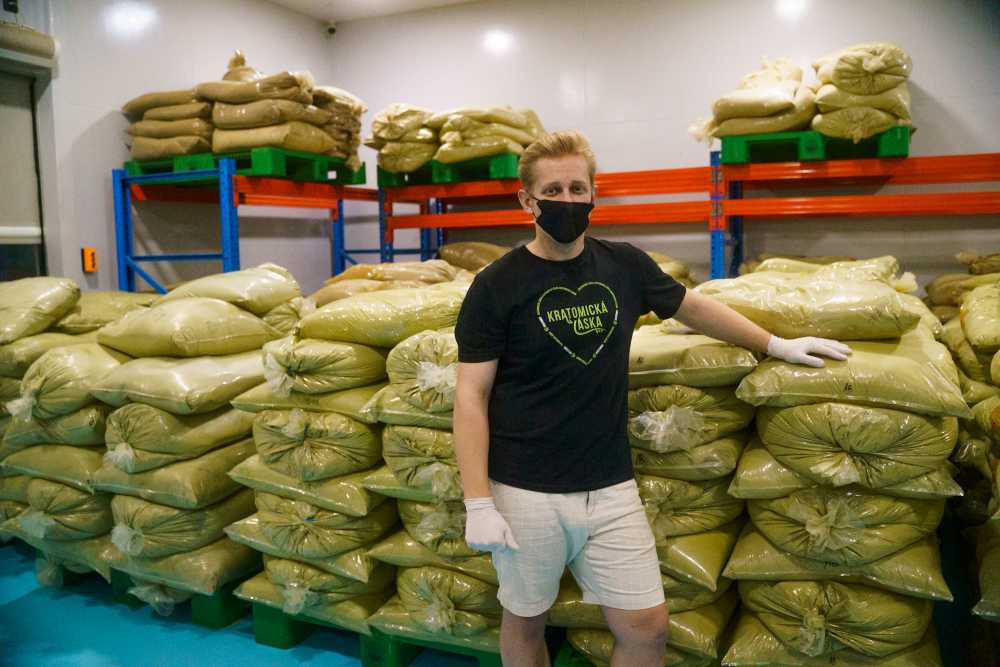
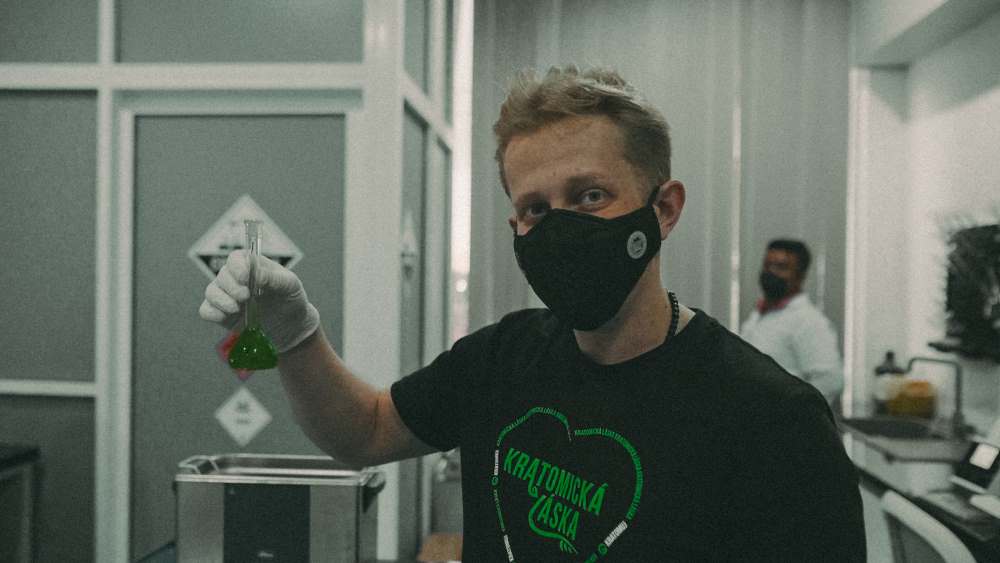
After transporting the crushed leaves to the central warehouse in Pontianak, two key processes take place. First, the leaves undergo laboratory testing to check their quality and safety. We test for:
- Presence of Heavy Metals – Such as lead, mercury, cadmium, and arsenic, to ensure product safety. While initial screening in Indonesia focuses only on lead for baseline safety, all other heavy metal analyses are rigorously verified in specialized European laboratories.
- Active Alkaloid Content – Especially the concentration of mitragynine and 7-hydroxymitragynine, which determine kratom potency.
- Microbial Contamination – Monitoring for the presence of bacteria such as Salmonella or E. coli, and other undesirable microorganisms.
Our transparent approach ensures that every package of kratom meets the highest quality and safety standards in accordance with applicable laws.
It is important to note that every sample must meet the minimum active alkaloid level we have set as a standard to ensure maximum efficacy. If test results show an alkaloid level below 1.50%, the batch is immediately rejected, discarded and sent back to the jungle. Our values are always high and consistent.
Processing Kratom According to the Harvest Season
Following successful testing, kratom leaves are processed differently depending on the season in which they were harvested. Each season affects the moisture content and active alkaloid concentration in the leaves, requiring a tailored processing approach.
Rainy Season Kratom
During the rainy season, kratom trees are exposed to high humidity and frequent rainfall. Precipitation causes the leaves to naturally have a higher water content. Excess water can lower the concentration of active alkaloids, making it essential for the leaves to undergo specialized processing. Rainy season kratom passes through modern drying technology that functions like a giant oven. The device is designed to precisely control temperature and humidity, removing excess water from the leaves and ensuring a higher concentration of active alkaloids. Once excess moisture is removed, the leaves are ground into a fine powder.
Dry Season Kratom
In the dry season, kratom leaves contain less moisture because the trees are not exposed to excessive precipitation. The leaves already possess a higher alkaloid concentration at harvest. After successful testing, dry season kratom is immediately ground into a fine powder.
Recommended Red Kratom Products
Homogenization and Quality Blending of Kratom
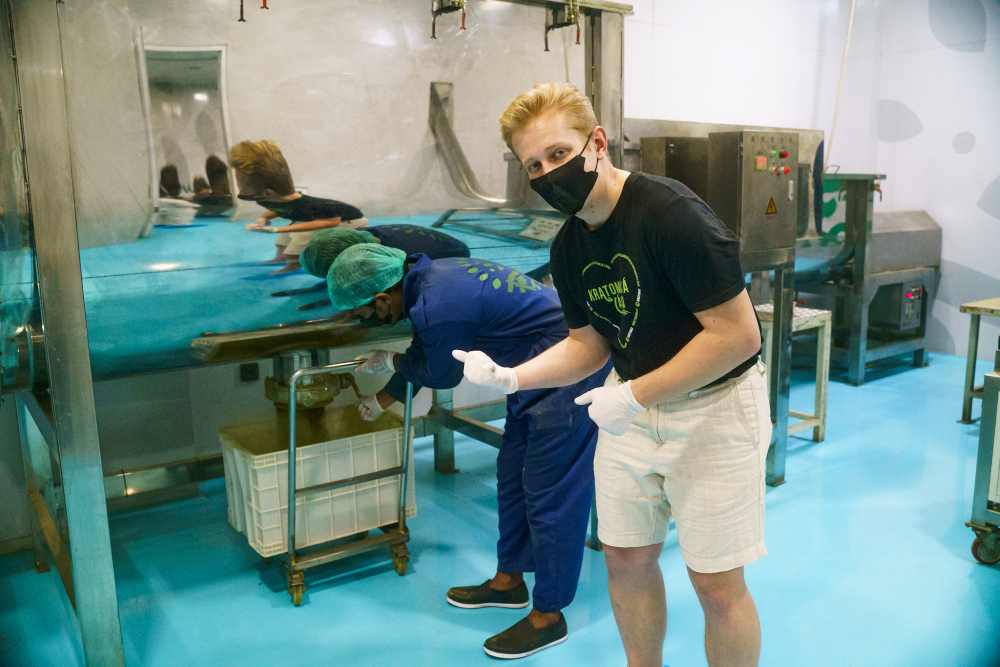
Another crucial step in kratom processing is the thorough mixing and homogenization of the ground kratom powder. These processes ensure that every single package of kratom contains the exact same amount of active alkaloids. Without proper blending, alkaloid levels would vary wildly from batch to batch leading to inconsistent effects. Our specialized blending machines ensure that every single package delivers uniform potency.
Therefore, we use specialized blending machines designed to ensure that all parts of the powder are evenly mixed. To guarantee absolute batch uniformity and optimal blending performance, our specialized machinery requires a minimum batch load of 250 kg. The result of this process is that every kratom package you purchase across a given batch will maintain identical quality and potency.
Packaging and Export – The Final Step Before Delivery to Warehouses
Carefully packaged and vacuum-sealed kratom is shipped from Pontianak to the capital city of Jakarta. From there, it is loaded onto cargo planes and sent onward to Germany. From Germany, the kratom cargo travels via land transport all the way to our destination. This entire journey spans approximately 12,000 km, meaning kratom travels thousands of kilometers from its homeland in the Indonesian jungles straight to our warehouses and shop.
A controlled export process ensures that kratom arrives in top condition, fresh, and ready for use. Each package is equipped with a QR code used primarily for our internal quality control. Scanning this code grants access to detailed information about the specific batch, including the harvest location, processing time, laboratory test results, and other key data. Certificates and test results can subsequently be found listed with each individual kratom variety.,
Recommended Green Kratom Products
The Journey of Kratom from the Warehouse to You
We receive kratom in practical 25 kg boxes, which we carefully stock in our warehouse. Once received, we gradually open supplies according to current needs. When we need to restock, we select kratom from the shelves that was vacuum-sealed and packaged in 1 kg quantities. We store the powder in glass containers because they create an airtight barrier, perfectly protecting the contents from air and moisture is essential for preserving long-term freshness and the overall quality of our kratom.
We store the containers in dark places so that sunlight does not affect the active kratom alkaloids. The ideal storage temperature is 20–22 °C.
During packaging, we maintain strict hygiene: we work in gloves and a clean environment to uphold all hygiene standards. Afterward, we package the selected kratom into 50 g bags, carefully labeling them with all required information.
Frequently Asked Questions / People often ask
How to properly store kratom so it doesn't lose potency and quality?
Proper kratom storage is essential for maintaining its potency and quality. First, it is important to ensure a dry environment, as moisture can cause mold or degrade the alkaloids contained in kratom. A resealable package protects kratom from unwanted moisture.
Kratom is also sensitive to light, so it should be stored in a dark place. Direct sunlight can reduce its effectiveness. Room temperature is ideal for storing kratom, although some recommend a cooler environment for long-term storage. However, extremely low temperatures, such as in a freezer, are not suitable.
An important step is also minimizing contact with air. Kratom oxidizes when exposed to air and loses its potency. Therefore, it is advisable to use airtight containers or the pouches in which we sell the kratom.
Warning
This article is for informational and educational purposes only. It does not constitute a recommendation for the consumption of kratom or other psychoactive substances. Kratom is classified as a psychomodulating substance, and products containing it are not intended for persons under 18 years of age. Do not use during pregnancy or breastfeeding, or in combination with alcohol, nicotine, medications, or other psychoactive substances.
Do not use these products before driving a motor vehicle or performing activities requiring heightened attention and coordination. In case of health issues or chronic illnesses, consult a physician before use. Keep out of reach of persons under 18 years of age.